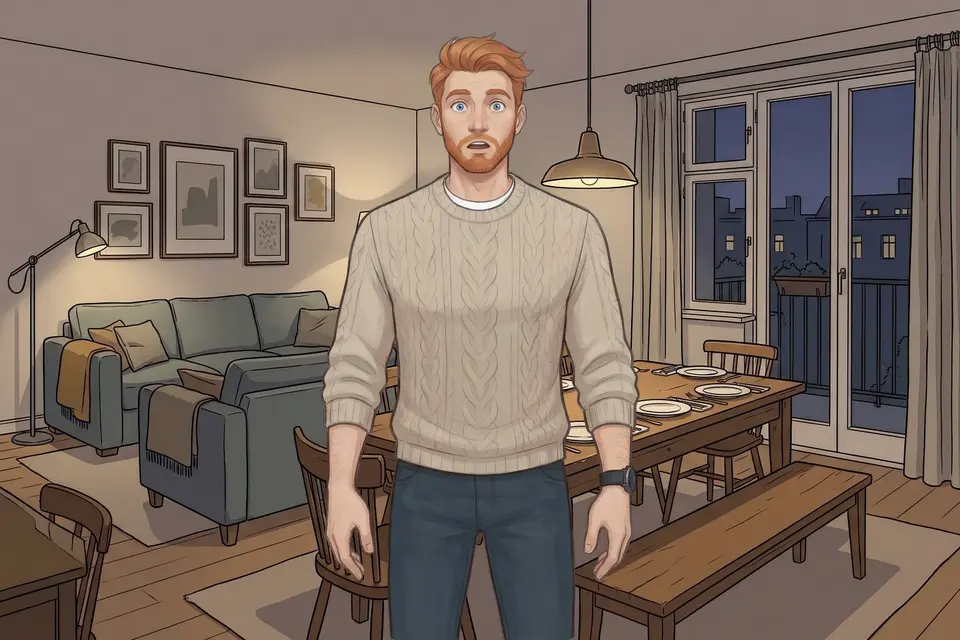
Networking auf einer Konferenz · Networking in German – small talk at a conference · B2

Click the scene or press Space to continue, use the number keys to choose an answer. Tap a word to see its translation. Want to read along? Read the whole dialogue in German with English translation below.

What happens in the story

You and your colleague Felix are at a customer service conference, and your boss wants you to make contacts. In the coffee break you spot Frau Nguyen, who handled your claim after your bike accident. She now runs customer service at the insurer, and her team has already introduced the call-back service you proposed in your team presentation. You start the conversation, explain what you're working on, ask about her experience, accept her offer of du and arrange to stay in touch.

The story is written for B2 level learners and takes about 5 minutes.

Phrases you will learn

  • Entschuldigung, kennen wir uns nicht? – Excuse me, don't we know each other?
  • Darf ich mich kurz dazustellen? – May I join you for a moment?
  • Das ist genau das Thema, mit dem ich mich gerade beschäftige. – That's exactly the topic I'm working on right now.
  • Darf ich fragen, auf welche Probleme Sie gestoßen sind? – May I ask what problems you ran into?
  • Wollen wir uns nicht duzen? – Sehr gern! Ich bin Alex. – Shall we use du? – I'd love to! I'm Alex.
  • Ich würde dir gern das Konzept schicken, an dem wir gerade arbeiten. – I'd like to send you the concept we're working on.

Grammar tip: relative clauses with prepositions

When the verb needs a preposition (sich beschäftigen mit, arbeiten an, stoßen auf), the preposition goes in front of the relative pronoun, and it decides the case: das Thema, mit dem ich mich beschäftige (mit + dative), das Konzept, an dem wir arbeiten (an + dative for "working on"). English often leaves the preposition at the end ("the topic I'm working on"); German never does.

Indirect questions work the same way, with the verb at the end: Darf ich fragen, auf welche Probleme Sie gestoßen sind?

Good to know: du at work events

At conferences, trade fairs and in many industries such as IT and start-ups, people quickly switch to du and first names. The more senior or older person usually offers it (Wollen wir uns duzen?). Once you have accepted, stick with du and the first name; going back to Sie sounds distant.

How to play

Click the scene or press Space to read on. When it is your turn, choose an answer with the mouse or the number keys. Natural answers earn points; a wrong answer is never a dead end, the other person repeats the right form and the conversation goes on.

Tap any word to see its translation and hear it pronounced. Save new words to your personal learn list, and find more B2 vocabulary in the German B2 word list.
Read the dialogue

The whole story in German with English translation, every answer you can choose

Scene: The bright foyer of a conference centre with standing tables and a coffee bar

Kaffeepause auf einem Kongress für Kundenservice. Felix und du steht mit euren Namensschildern an einem Stehtisch. Um euch herum tauschen Leute Visitenkarten.

Coffee break at a customer service conference. You and Felix are standing at a standing table with your name badges. All around you, people are swapping business cards.

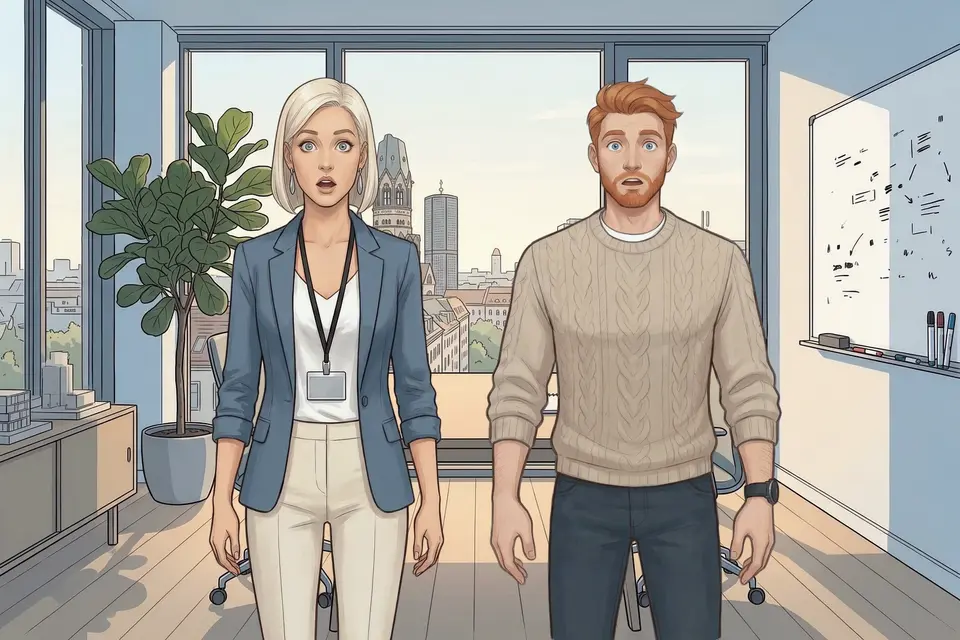
Felix: Komm schon, Frau Petersen hat gesagt, wir sollen Kontakte knüpfen. Die Frau da drüben kennst du doch, oder?

Come on, Frau Petersen said we should make contacts. You know the woman over there, don't you?

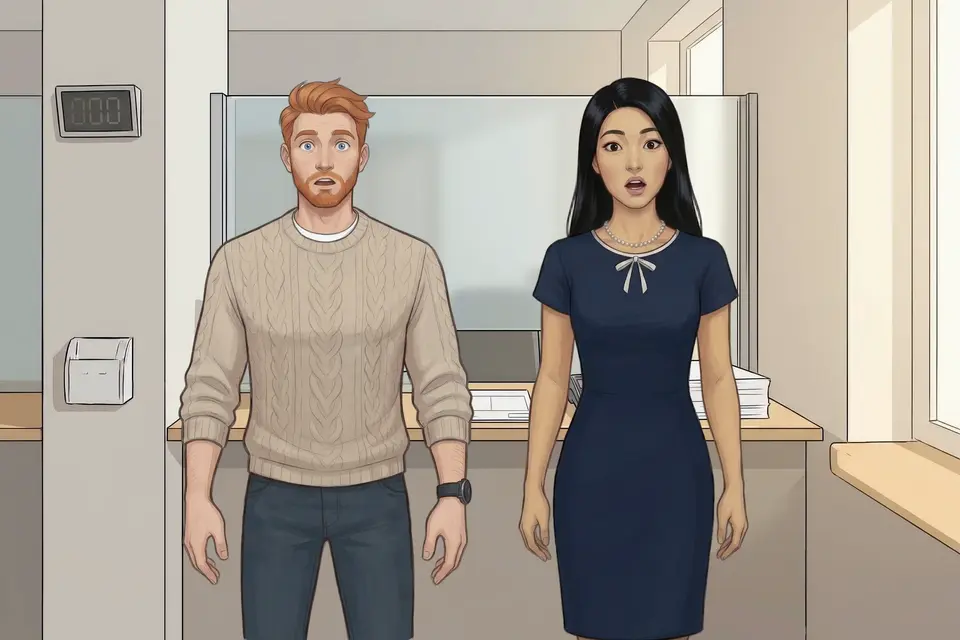
Du schaust hinüber. An einem Stehtisch steht Frau Nguyen von der Versicherung, die damals deinen Fahrradunfall bearbeitet hat.

You look over. At a standing table stands Frau Nguyen from the insurer, who handled your bike accident back then.

Your answer

  1. Good answer

    Entschuldigung, kennen wir uns nicht? Sie haben im Frühjahr meinen Fahrradunfall bearbeitet.

    Excuse me, don't we know each other? You handled my bike accident in the spring.

    Nguyen: Ach ja! Die Autotür, mit dem Zeugen. Wie geht es Ihrem Knie?

    Oh yes! The car door, with the witness. How's your knee?

    Du: Wieder gut, danke. Und der Zeuge steht übrigens hier neben mir.

    Fine again, thanks. And the witness is standing right here next to me, by the way.

  2. Good answer

    Hallo, darf ich mich kurz dazustellen?

    Hello, may I join you for a moment?

    Nguyen: Gern. Moment … Sie kenne ich doch! Der Fahrradunfall im Frühjahr, oder? Wie geht es Ihrem Knie?

    Of course. Wait … I know you! The bike accident in the spring, right? How's your knee?

    Du: Wieder gut, danke. Und der Zeuge steht übrigens hier neben mir.

    Fine again, thanks. And the witness is standing right here next to me, by the way.

  3. Mistake: "Unfall" is masculine, so in the accusative: meinen Fahrradunfall

    Entschuldigung, kennen wir uns nicht? Sie haben im Frühjahr mein Fahrradunfall bearbeitet.

    Excuse me, don't we know each other? You handled my bike accident in the spring.

    Nguyen: Ach ja, Ihren Fahrradunfall! Die Autotür, mit dem Zeugen. Wie geht es Ihrem Knie?

    Oh yes, your bike accident! The car door, with the witness. How's your knee?

    Du: Wieder gut, danke. Und der Zeuge steht übrigens hier neben mir.

    Fine again, thanks. And the witness is standing right here next to me, by the way.

Felix: Felix, hallo! Ich bin der Kollege, der alles gesehen hat.

Felix, hi! I'm the colleague who saw everything.

Nguyen: Was für ein Zufall! Und was führt Sie beide hierher?

What a coincidence! And what brings you both here?

Your answer

  1. Good answer

    Wir arbeiten im Kundenservice einer Softwarefirma. Der Vortrag über Rückrufsysteme war genau das Thema, mit dem ich mich gerade beschäftige.

    We work in customer service at a software company. The talk on call-back systems was exactly the topic I'm working on right now.

    Nguyen: Rückrufsysteme? Da sind Sie bei mir richtig.

    Call-back systems? Then you've come to the right person.

  2. Good answer

    Wir arbeiten im Kundenservice. Wir führen gerade einen Rückrufservice ein.

    We work in customer service. We're introducing a call-back service at the moment.

    Nguyen: Einen Rückrufservice? Da sind Sie bei mir richtig.

    A call-back service? Then you've come to the right person.

  3. Mistake: "mit" takes the dative, also in a relative clause: das Thema, mit dem …

    Der Vortrag über Rückrufsysteme war genau das Thema, mit das ich mich gerade beschäftige.

    The talk on call-back systems was exactly the topic I'm working on right now.

    Nguyen: Das Thema, mit dem Sie sich beschäftigen, ist Rückruf? Da sind Sie bei mir richtig.

    The topic you're working on is call-backs? Then you've come to the right person.

Nguyen: Ich leite inzwischen den Kundenservice der Versicherung, und wir haben letztes Jahr genau so ein System eingeführt.

I'm now head of customer service at the insurer, and last year we introduced exactly that kind of system.

Your answer

  1. Good answer

    Darf ich fragen, auf welche Probleme Sie bei der Einführung gestoßen sind?

    May I ask what problems you ran into when you introduced it?

    Nguyen: Gute Frage. Das größte Problem waren Kunden, die zurückgerufen wurden, aber nicht rangegangen sind.

    Good question. The biggest problem was customers who were called back but didn't pick up.

  2. Good answer

    Und? Hat es gut funktioniert?

    And? Did it work well?

    Nguyen: Meistens. Das größte Problem waren Kunden, die zurückgerufen wurden, aber nicht rangegangen sind.

    Mostly. The biggest problem was customers who were called back but didn't pick up.

  3. Mistake: an indirect question sends the verb to the end: auf welche Probleme Sie … gestoßen sind

    Darf ich fragen, auf welche Probleme sind Sie bei der Einführung gestoßen?

    May I ask what problems you ran into when you introduced it?

    Nguyen: Auf welche Probleme wir gestoßen sind? Vor allem auf Kunden, die zurückgerufen wurden, aber nicht rangegangen sind.

    What problems we ran into? Mainly customers who were called back but didn't pick up.

Nguyen: Wir schicken jetzt fünf Minuten vorher eine SMS. Seitdem klappt es. Sagen Sie mal, wollen wir uns nicht duzen? Auf Konferenzen ist das ja üblich. Ich bin Linh.

Now we send a text five minutes beforehand. Since then it's worked. Tell you what, shall we use du? It's usual at conferences. I'm Linh.

Your answer

  1. Good answer

    Sehr gern! Ich bin Alex. Danke für den Tipp mit der SMS, Linh, das probieren wir auf jeden Fall aus.

    I'd love to! I'm Alex. Thanks for the tip about the text, Linh, we'll definitely try that.

    Nguyen: Gern geschehen!

    You're welcome!

  2. Good answer

    Ja, gern.

    Yes, sure.

    Nguyen: Und du bist …?

    And you are …?

    Du: Ach so, Alex!

    Oh, Alex!

  3. Correct German, not the best answer here: correct German, but once du has been offered and accepted, use her first name and du: Hast du …, Linh?

    Gern, Frau Nguyen. Haben Sie die SMS selbst geschrieben?

    Gladly, Frau Nguyen. Did you write the text messages yourself?

    Nguyen: Linh, bitte! Und ja, die Texte habe ich selbst geschrieben. Und du bist Alex, richtig?

    Linh, please! And yes, I wrote the texts myself. And you're Alex, right?

Nguyen: Wenn ihr wollt, erzähle ich euch gern mehr. Wir könnten uns mal austauschen.

If you like, I'm happy to tell you more. We could get together and share ideas some time.

Your answer

  1. Good answer

    Sehr gern. Kann ich dir eine Mail schreiben? Ich würde dir gern das Konzept schicken, an dem wir gerade arbeiten.

    I'd love to. Can I email you? I'd like to send you the concept we're working on at the moment.

    Nguyen: Unbedingt! Hier ist meine Karte.

    Definitely! Here's my card.

  2. Good answer

    Gern! Hast du eine Visitenkarte?

    Sure! Do you have a business card?

    Nguyen: Natürlich. Hier, schreib mir einfach.

    Of course. Here, just drop me a line.

  3. Mistake: "arbeiten an" takes the dative, also in a relative clause: das Konzept, an dem wir arbeiten

    Gern. Ich würde dir das Konzept schicken, an das wir gerade arbeiten.

    Sure. I'd send you the concept we're working on at the moment.

    Nguyen: Das Konzept, an dem ihr arbeitet? Unbedingt, schick es mir! Hier ist meine Karte.

    The concept you're working on? Definitely, send it to me! Here's my card.

Ein Gong ruft zum nächsten Vortrag. Linh winkt euch zu und verschwindet im Saal.

A gong calls everyone to the next talk. Linh waves to you and disappears into the hall.

Felix: Siehst du? Networking ist gar nicht so schlimm. Und Frau Petersen wird sich über den Kontakt freuen.

See? Networking isn't so bad at all. And Frau Petersen will be pleased about the contact.

Ein Gespräch angefangen, gezielt nachgefragt, das Du angenommen und einen Kontakt gewonnen. Du hast auf Deutsch genetzwerkt wie ein Profi!

You started a conversation, asked targeted questions, accepted du and gained a contact. You networked in German like a pro!