Das Vorstellungsgespräch · Job interview in German – questions and answers · B1

Click the scene or press Space to continue, use the number keys to choose an answer. Tap a word to see its translation. Want to read along? Read the whole dialogue in German with English translation below.

What happens in the story

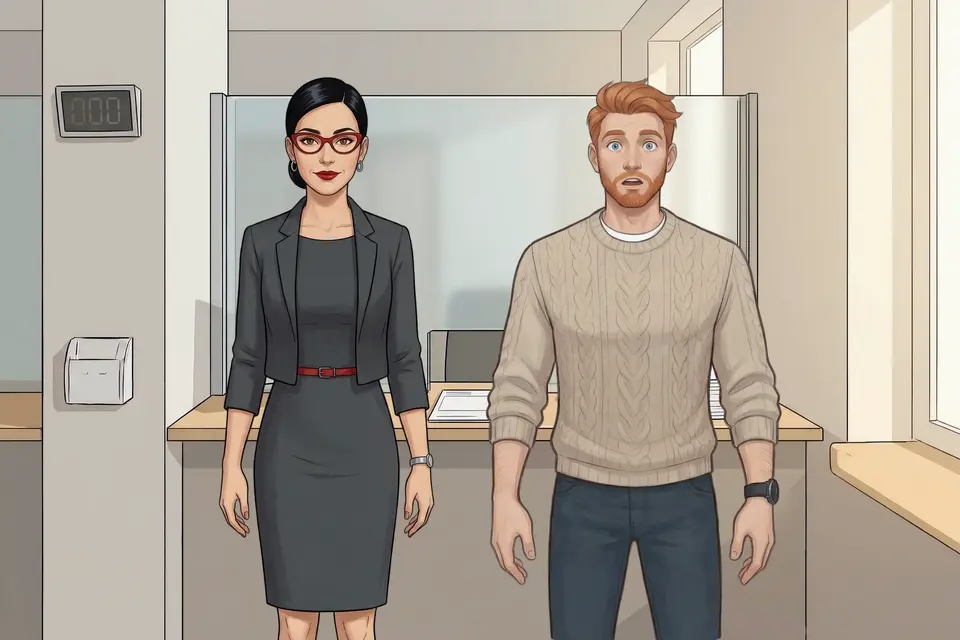
You've applied for a job in customer service, and today is the interview (Vorstellungsgespräch). Frau Neumann from HR asks the classic questions: tell us about yourself, why do you want to work for us, what are your strengths and weaknesses, do you have any questions? Your answers decide how the interview goes, and three days later an email arrives ...

The story is written for B1 level learners and takes about 6 minutes. It uses formal German (Sie) throughout, as in a real interview.

Phrases you will learn

  • Erzählen Sie doch etwas über sich. – Tell me a bit about yourself.
  • Ich habe drei Jahre in einem Hotel an der Rezeption gearbeitet. – I worked on hotel reception for three years.
  • Warum möchten Sie bei uns arbeiten? – Why would you like to work for us?
  • Weil ich gern mit Menschen arbeite. – Because I like working with people.
  • Meine Kollegen sagen, dass ich immer ruhig bleibe. – My colleagues say that I always stay calm.
  • Was sind Ihre Stärken und Schwächen? – What are your strengths and weaknesses?
  • Wie sieht ein typischer Arbeitstag aus? – What does a typical working day look like?
  • Ich danke Ihnen für die Einladung. – Thank you for inviting me.

Grammar tip: Perfekt and weil / dass

To talk about your experience you use the Perfekt: haben or sein + the participle at the end. Verbs of movement like kommen take sein:

  • Ich habe in Spanien studiert. – I studied in Spain.
  • Ich bin mit der U-Bahn gekommen. – I came by underground (not Ich habe … gekommen).

To give reasons and opinions, use weil and dass, with the verb at the end: … weil mich die Stelle sehr interessiert, Ich denke, dass ich sehr geduldig bin.

Interview tip

Name a real but small weakness and say what you do about it, and always have a question ready at the end. "I have no weaknesses" and "No, no questions" are correct German, but they don't help you get the job.

How to play

Click the scene or press Space to read on. When it is your turn, choose an answer with the mouse or the number keys. Natural answers earn points; a wrong answer is never a dead end, Frau Neumann repeats your answer in the right form and you go on.

Tap any word to see its translation and hear it pronounced. Save the new words to your personal learn list and practise them later with flashcards.


Read the dialogue

The whole story in German with English translation, every answer you can choose

Scene: A meeting room in an office

Du hast dich bei einer Firma in Berlin beworben, für eine Stelle im Kundenservice. Heute ist das Vorstellungsgespräch.

You've applied to a company in Berlin for a job in customer service. Today is the interview.

Neumann: Guten Tag! Ich bin Sabine Neumann aus der Personalabteilung. Schön, dass Sie da sind.

Hello! I'm Sabine Neumann from HR. Nice that you're here.

Neumann: Haben Sie uns gut gefunden?

Did you find us all right?

Your answer

  1. Good answer

    Ja, danke. Ich bin mit der U-Bahn gekommen, das war ganz einfach.

    Yes, thanks. I came by underground, it was very easy.

  2. Good answer

    Ja, danke, ohne Probleme.

    Yes, thanks, no problem at all.

  3. Mistake: kommen takes "sein": ich bin gekommen

    Ja, ich habe mit der U-Bahn gekommen.

    Yes, I came by underground.

    Neumann: Ah, Sie sind mit der U-Bahn gekommen. Das ist praktisch, die Station ist direkt vor der Tür.

    Ah, you came by underground. That's handy, the station is right outside the door.

Neumann: Bitte, setzen Sie sich. Erzählen Sie doch mal etwas über sich.

Please, have a seat. Tell me a bit about yourself.

Your answer

  1. Good answer

    Ich habe in Spanien BWL studiert und danach drei Jahre in einem Hotel an der Rezeption gearbeitet.

    I studied business in Spain and then worked on hotel reception for three years.

  2. Good answer

    Ich habe drei Jahre in einem Callcenter gearbeitet.

    I worked in a call centre for three years.

  3. Mistake: Perfekt needs the participle: gearbeitet

    Ich habe drei Jahre in einem Hotel arbeiten.

    I have work in a hotel for three years.

    Neumann: Sie haben also drei Jahre in einem Hotel gearbeitet. Interessant.

    So you worked in a hotel for three years. Interesting.

Neumann: Warum möchten Sie bei uns arbeiten?

Why would you like to work for us?

Your answer

  1. Good answer

    Weil ich gern mit Menschen arbeite und Ihre Firma einen sehr guten Ruf hat.

    Because I like working with people and your company has a very good reputation.

  2. Good answer

    Ich möchte bei Ihnen arbeiten, weil mich die Stelle sehr interessiert.

    I'd like to work for you because the job really interests me.

  3. Mistake: after "weil" the verb goes to the end

    Weil ich arbeite gern mit Menschen.

    Because I like working with people.

    Neumann: Weil Sie gern mit Menschen arbeiten, verstehe. Das ist bei uns sehr wichtig.

    Because you like working with people, I see. That's very important here.

Neumann: Was sind Ihre Stärken?

What are your strengths?

Your answer

  1. Good answer

    Meine Kollegen sagen, dass ich immer ruhig bleibe, auch wenn es stressig ist.

    My colleagues say that I always stay calm, even when it's stressful.

  2. Good answer

    Ich denke, dass ich sehr geduldig bin.

    I think that I'm very patient.

  3. Mistake: after "dass" the verb goes to the end

    Ich denke, dass ich bin sehr geduldig.

    I think that I am very patient.

    Neumann: Dass Sie geduldig sind, ist gut. Im Kundenservice braucht man viel Geduld.

    It's good that you're patient. In customer service you need a lot of patience.

Neumann: Und Ihre Schwächen?

And your weaknesses?

Your answer

  1. Good answer

    Mein Deutsch ist noch nicht perfekt, aber ich lerne jeden Tag und mache gerade einen B1-Kurs.

    My German isn't perfect yet, but I study every day and I'm doing a B1 course right now.

    Neumann: Das merkt man. Sie sprechen schon sehr gut.

    It shows. You already speak very well.

  2. Good answer

    Manchmal bin ich zu perfektionistisch, aber ich habe gelernt, Prioritäten zu setzen.

    Sometimes I'm too much of a perfectionist, but I've learned to set priorities.

    Neumann: Gut, dass Sie das wissen.

    Good that you know that.

  3. Correct German, not the best answer here: sounds arrogant: name a small weakness and what you do about it

    Ich habe keine Schwächen.

    I don't have any weaknesses.

    Neumann: Wirklich? Keine? Na gut ...

    Really? None? Well, okay ...

Neumann: Haben Sie noch Fragen an uns?

Do you have any questions for us?

Your answer

  1. Good answer

    Ja. Wie sieht ein typischer Arbeitstag bei Ihnen aus?

    Yes. What does a typical working day look like here?

    Neumann: Sie beantworten Anrufe und E-Mails von Kunden und arbeiten eng mit dem Team zusammen.

    You answer calls and emails from customers and work closely with the team.

  2. Good answer

    Ja. Wann kann ich mit einer Antwort rechnen?

    Yes. When can I expect an answer?

    Neumann: Wir melden uns bis Ende der Woche.

    We'll get back to you by the end of the week.

  3. Correct German, not the best answer here: always ask a question: it shows interest

    Nein, danke.

    No, thanks.

    Neumann: Gut. Dann sind wir fertig.

    Good. Then we're done.

Neumann: Vielen Dank für das Gespräch. Wir melden uns bald.

Thank you very much for the conversation. We'll be in touch soon.

Your answer

  1. Good answer

    Ich danke Ihnen für die Einladung. Auf Wiedersehen!

    Thank you for inviting me. Goodbye!

  2. Correct German, not the best answer here: too casual for a job interview

    Danke! Tschüss!

    Thanks! Bye!

    Neumann: Auf Wiedersehen!

    Goodbye!

Drei Tage später bekommst du eine E-Mail von Frau Neumann.

Three days later you get an email from Frau Neumann.

Du hast die Stelle bekommen! Du hast das ganze Gespräch auf Deutsch geschafft. Super gemacht!

You got the job! You managed the whole interview in German. Well done!