Auszug und Kaution · Moving out in Germany – flat handover and getting your deposit back · B2

Click the scene or press Space to continue, use the number keys to choose an answer. Tap a word to see its translation. Want to read along? Read the whole dialogue in German with English translation below.

What happens in the story

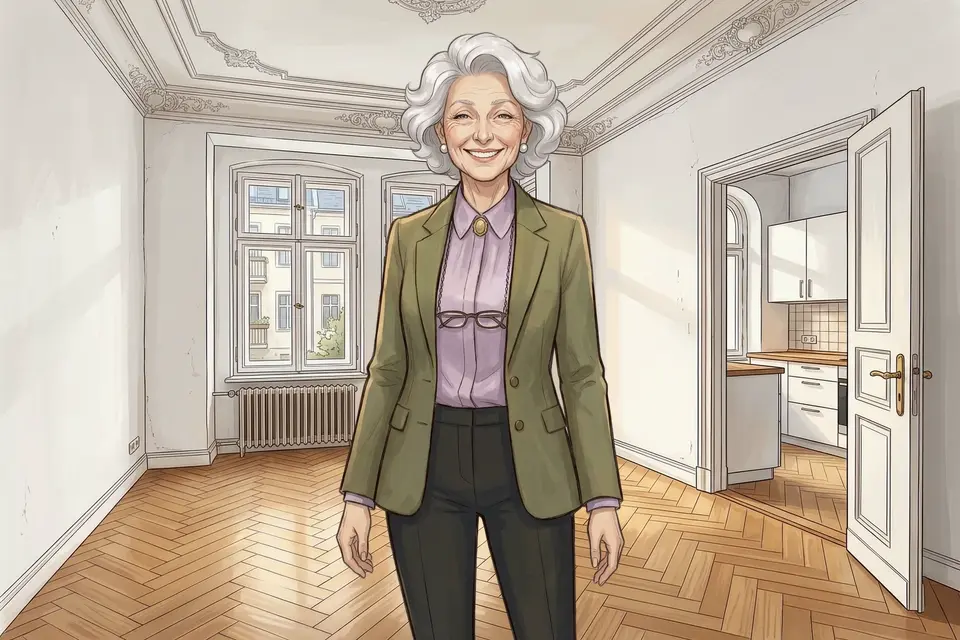
Years after the apartment viewing, you're moving out of Frau Krause's flat. On the last day she comes for the handover (Wohnungsübergabe). You explain why you're leaving, tell her who painted the walls, and when she finds a deep scratch in the parquet you have to prove it was already there when you moved in. Finally you talk about the deposit (Kaution), which she can't pay back in full until the utility bill statement arrives, and you hand over the keys.

The story is written for B2 level learners and takes about 5 minutes.

Phrases you will learn

  • Obwohl ich mich hier sehr wohlgefühlt habe, ist die Wohnung zu klein geworden. – Although I've felt really at home here, the flat has become too small.
  • Die Wände wurden letzte Woche von einem Maler gestrichen. – The walls were painted by a painter last week.
  • Der Kratzer war schon da, bevor ich eingezogen bin. – The scratch was already there before I moved in.
  • Ich hatte ihn damals im Übergabeprotokoll notiert. – I had noted it in the handover report at the time.
  • Wäre es trotzdem möglich, einen Teil der Kaution schon jetzt zu überweisen? – Would it still be possible to transfer part of the deposit now?
  • Ich habe hier wirklich gern gewohnt. – I really enjoyed living here.

Grammar tip: Plusquamperfekt, and obwohl vs. trotzdem

The Plusquamperfekt (hatte / war + participle) is the "past of the past": it marks something that happened before another past event. Ich hatte den Kratzer beim Einzug notiert – before today's handover. Don't use it as a "more polite" past: Ich habe hier gern gewohnt, not Ich hatte hier gern gewohnt.

obwohl starts a subordinate clause (verb at the end), and the main clause then starts with its verb: Obwohl ich mich wohlgefühlt habe, ist die Wohnung zu klein. trotzdem is an adverb in the main clause and takes the first place, so the verb comes next: Trotzdem brauche ich das Geld. Don't use both for the same contrast.

Good to know: moving out in Germany

When you move out, the landlord and tenant usually inspect the flat together and sign a handover report (Übergabeprotokoll). Damage that was noted when you moved in is not your responsibility, so keep the report from the day you moved in. Whether you have to repaint depends on your contract. The landlord may keep part of the deposit until the next utility bill statement (Nebenkostenabrechnung) is done.

How to play

Click the scene or press Space to read on. When it is your turn, choose an answer with the mouse or the number keys. Natural answers earn points; a wrong answer is never a dead end, Frau Krause repeats the right form and the handover goes on.

Tap any word to see its translation and hear it pronounced. Save new words to your personal learn list, and find more B2 vocabulary in the German B2 word list.

Read the dialogue

The whole story in German with English translation, every answer you can choose

Scene: The stairwell of an old Berlin apartment building

Letzter Tag in deiner Wohnung. Die Kisten sind weg, nur die Schlüssel hast du noch. Frau Krause kommt die Treppe herauf, mit einer Mappe unter dem Arm.

Last day in your flat. The boxes are gone, you only have the keys left. Frau Krause comes up the stairs with a folder under her arm.

Krause: Guten Morgen! Heute ist also die Wohnungsübergabe. Schade, dass Sie ausziehen. Warum eigentlich?

Good morning! So today is the handover of the flat. A pity you're moving out. Why, actually?

Your answer

  1. Good answer

    Obwohl ich mich hier sehr wohlgefühlt habe, ist die Wohnung für mich einfach zu klein geworden. Ich arbeite inzwischen viel im Homeoffice.

    Although I've felt really at home here, the flat has simply become too small for me. I work from home a lot now.

    Krause: Das verstehe ich. Mit Homeoffice braucht man ein Zimmer mehr.

    I understand. When you work from home you need an extra room.

  2. Good answer

    Ich brauche mehr Platz, weil ich jetzt viel im Homeoffice arbeite.

    I need more space because I work from home a lot now.

    Krause: Das verstehe ich.

    I understand.

  3. Mistake: with "obwohl", the main clause starts with the verb, no "trotzdem": Obwohl …, ist die Wohnung zu klein geworden

    Obwohl ich mich hier wohlgefühlt habe, trotzdem ist die Wohnung zu klein geworden.

    Although I've felt at home here, nevertheless the flat has become too small.

    Krause: Obwohl Sie sich hier wohlgefühlt haben, ist sie zu klein geworden. Das verstehe ich.

    Although you've felt at home here, it's become too small. I understand.

Krause: Na dann, schauen wir uns die Wohnung mal an.

Well then, let's have a look at the flat.

Scene: An empty flat with wooden floors

Die leeren Zimmer klingen hallig. Frau Krause setzt ihre Lesebrille auf und geht langsam durch das Wohnzimmer.

The empty rooms echo. Frau Krause puts on her reading glasses and walks slowly through the living room.

Krause: Oh, die Wände sind ja frisch weiß. Haben Sie selbst gestrichen?

Oh, the walls are freshly white. Did you paint them yourself?

Your answer

  1. Good answer

    Nein, die Wände wurden letzte Woche von einem Maler gestrichen. Die Rechnung habe ich dabei.

    No, the walls were painted by a painter last week. I've got the invoice with me.

    Krause: Sehr ordentlich, danke.

    Very thorough, thank you.

  2. Good answer

    Nein, ein Maler hat letzte Woche alles gestrichen.

    No, a painter painted everything last week.

    Krause: Sehr ordentlich, danke.

    Very thorough, thank you.

  3. Mistake: streichen is irregular: gestrichen

    Nein, die Wände wurden letzte Woche von einem Maler gestreicht.

    No, the walls were painted by a painter last week.

    Krause: Gestrichen, von einem Maler. Sehr ordentlich, danke.

    Painted by a painter. Very thorough, thank you.

Krause bleibt am Fenster stehen und zeigt auf den Boden.

Frau Krause stops by the window and points at the floor.

Krause: Und was ist mit diesem Kratzer im Parkett? Der ist ziemlich tief.

And what about this scratch in the parquet? It's quite deep.

Your answer

  1. Good answer

    Der Kratzer war schon da, bevor ich eingezogen bin. Ich hatte ihn damals im Übergabeprotokoll notiert.

    The scratch was already there before I moved in. I had noted it in the handover report at the time.

    Krause: Moment … Sie haben recht, da steht es: „Kratzer im Wohnzimmer, am Fenster.“

    Just a moment … you're right, here it is: "Scratch in the living room, by the window."

  2. Good answer

    Den gab es schon beim Einzug. Er steht im Protokoll.

    It was already there when I moved in. It's in the report.

    Krause: Moment … Sie haben recht, da steht es.

    Just a moment … you're right, here it is.

  3. Mistake: "notieren" takes haben: Ich hatte ihn notiert

    Der Kratzer war schon da. Ich war ihn damals im Protokoll notiert.

    The scratch was already there. I had noted it in the report back then.

    Krause: Sie hatten ihn notiert? Moment … Sie haben recht, da steht es.

    You had noted it? Just a moment … you're right, here it is.

Krause: Gut, dann ist alles in Ordnung. Die Kaution bekommen Sie natürlich zurück. Allerdings muss ich noch die Nebenkostenabrechnung abwarten, und die kommt erst im Frühjahr.

Good, then everything's in order. You'll get your deposit back, of course. However, I still have to wait for the utility bill statement, and that only comes in spring.

Your answer

  1. Good answer

    Das verstehe ich. Wäre es trotzdem möglich, einen Teil der Kaution schon jetzt zu überweisen? Ich brauche das Geld für die neue Wohnung.

    I understand. Would it still be possible to transfer part of the deposit now? I need the money for the new flat.

    Krause: Das ist üblich, ja. Ich überweise Ihnen nächste Woche achtzig Prozent und den Rest nach der Abrechnung.

    That's usual, yes. I'll transfer eighty percent to you next week and the rest after the statement.

  2. Good answer

    Wann bekomme ich die Kaution denn ungefähr zurück?

    So roughly when will I get the deposit back?

    Krause: Achtzig Prozent überweise ich Ihnen nächste Woche, den Rest nach der Abrechnung. So ist es üblich.

    I'll transfer eighty percent to you next week, the rest after the statement. That's the usual way.

  3. Mistake: "trotzdem" takes the first place, so the verb comes next: Trotzdem brauche ich das Geld …

    Das verstehe ich. Trotzdem ich brauche das Geld für die neue Wohnung.

    I understand. Still, I need the money for the new flat.

    Krause: Trotzdem brauchen Sie das Geld, natürlich. Ich überweise Ihnen nächste Woche achtzig Prozent und den Rest nach der Abrechnung.

    You still need the money, of course. I'll transfer eighty percent to you next week and the rest after the statement.

Krause: Dann brauche ich nur noch die Schlüssel.

Then all I need is the keys.

Your answer

  1. Good answer

    Hier sind alle drei Schlüssel. Vielen Dank für alles, Frau Krause. Ich habe hier wirklich gern gewohnt.

    Here are all three keys. Thank you for everything, Frau Krause. I really enjoyed living here.

    Krause: Und Sie waren immer eine sehr angenehme Mietpartei. Alles Gute in der neuen Wohnung!

    And you were always a very pleasant tenant. All the best in the new flat!

  2. Good answer

    Hier sind die Schlüssel. Danke für alles!

    Here are the keys. Thanks for everything!

    Krause: Gern. Alles Gute in der neuen Wohnung!

    You're welcome. All the best in the new flat!

  3. Mistake: the Plusquamperfekt is only for something before another past event; here use the Perfekt: Ich habe hier immer gern gewohnt

    Hier sind die Schlüssel. Vielen Dank, Frau Krause. Ich hatte hier immer gern gewohnt.

    Here are the keys. Thank you, Frau Krause. I had always enjoyed living here.

    Krause: Das freut mich, dass Sie hier gern gewohnt haben. Alles Gute in der neuen Wohnung!

    I'm glad you enjoyed living here. All the best in the new flat!

Frau Krause unterschreibt das Übergabeprotokoll, du unterschreibst auch. Die Tür fällt hinter dir ins Schloss.

Frau Krause signs the handover report, and you sign too. The door clicks shut behind you.

Eine Wohnungsübergabe ohne Streit, mit Protokoll und mit dem größten Teil der Kaution nächste Woche auf dem Konto. Gut gemacht!

A flat handover without arguments, with a report and with most of the deposit in your account next week. Well done!