Probleme mit der Vermieterin – die Heizung ist kaputt· Complaining to your landlord in German – the heating is broken · A2
Click the scene or press Space to continue, use the number keys to choose an answer. Tap a word to see its translation. Want to read along? Read the whole dialogue in German with English translation below.
What happens in the story
It's a Monday morning in December, your flat is freezing and only cold water comes out of the shower. The gas boiler in the kitchen shows a red light. You phone your landlady, Frau Krause from Apartment viewing in German: you say what isn't working, since when, and what you have already tried. She sends a heating engineer. Can she come today, or only tomorrow? Then Frau Becker arrives and finds the problem.
Hier spricht Alex Kowalczyk aus dem dritten Stock. – This is Alex Kowalczyk from the third floor.
Die Heizung funktioniert nicht. – The heating isn't working.
Die Heizung und das warme Wasser funktionieren nicht. – The heating and the hot water aren't working.
Seit wann ist das so? – Seit zwei Tagen. – How long has it been like this? – For two days.
Ich habe die Therme zweimal neu gestartet. – I've restarted the boiler twice.
Die Heizung ist ausgegangen. – The heating has gone off.
Geht es vielleicht schon heute? – Could it be today, maybe?
Die Reparatur bezahle natürlich ich. – I'll pay for the repair, of course.
Grammar tip: funktioniert nicht, seit and the Perfekt
With two subjects the verb is plural: Die Heizung und das Wasser funktionieren nicht.
Seit + dative says how long a problem has lasted, with the present tense: Die Heizung funktioniert seit zwei Tagen nicht (plural dative: Tagen).
Most verbs form the Perfekt with haben, especially when they have an object: Ich habe die Therme neu gestartet.
Verbs of movement or change take sein: Die Heizung ist ausgegangen. Ich bin eingezogen.
Good to know: repairs in a rented flat
In Germany the landlord (Vermieter) has to repair the heating and pay for it. Report a problem straight away: by phone for an emergency like no heating in winter, and also in writing (an email is fine) so you have a record. If a property management company runs the building, contact the Hausverwaltung instead. Many Berlin flats in old buildings have their own gas boiler (Gastherme) for heating and hot water; low water pressure is a common reason why it stops.
How to play
Click the scene or press Space to read on. When it is your turn, choose an answer with the mouse or the number keys. Natural answers earn points; a wrong answer is never a dead end, Frau Krause or Frau Becker shows you the right form and you go on.
Tap any word to see its translation and hear it pronounced. Save the new words to your personal learn list and practise them later with flashcards.
Read the dialogue
The whole story in German with English translation, every answer you can choose
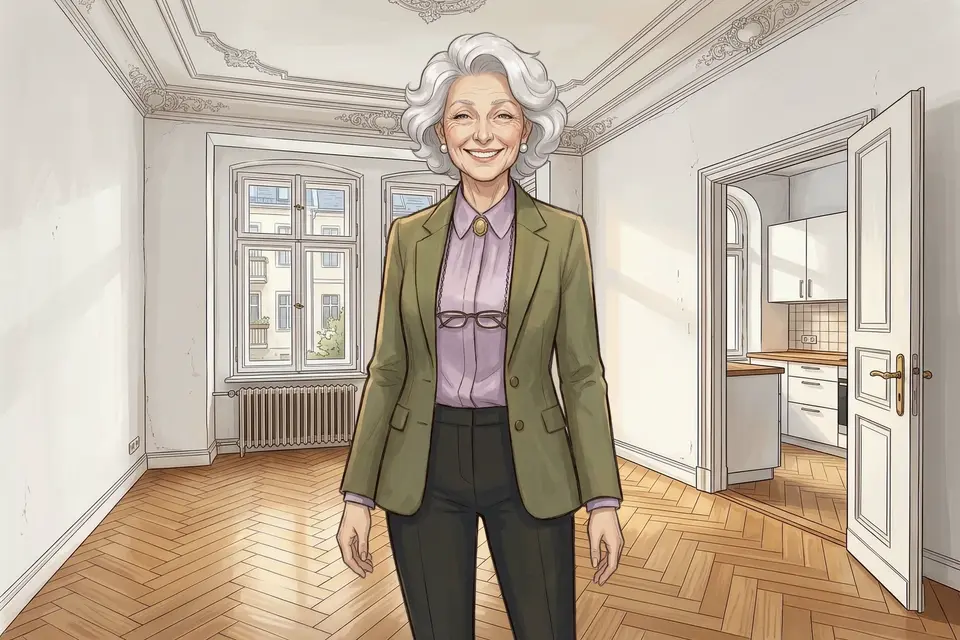
Scene: An empty flat with wooden floors
Du wohnst seit einem Monat in der Wohnung von Frau Krause. Sie ist noch fast leer.
You've been living in Frau Krause's flat for a month. It's still almost empty.
Es ist Montagmorgen im Dezember. In der Wohnung ist es eiskalt.
It's Monday morning in December. It's freezing in the flat.
Die Heizkörper sind kalt, und aus der Dusche kommt nur kaltes Wasser.
The radiators are cold, and only cold water comes out of the shower.
In der Küche hängt die Gastherme. Sie zeigt ein rotes Licht.
The gas boiler hangs in the kitchen. It's showing a red light.
Du rufst deine Vermieterin an, Frau Krause.
You call your landlady, Frau Krause.
Krause: Krause?
Krause speaking?
Your answer
Good answer
Guten Morgen, Frau Krause. Hier spricht Alex Kowalczyk aus dem dritten Stock.
Good morning, Frau Krause. This is Alex Kowalczyk from the third floor.
Good answer
Guten Morgen, Frau Krause. Hier ist Alex Kowalczyk.
Good morning, Frau Krause. It's Alex Kowalczyk.
Correct German, not the best answer here: correct, but she may not know your voice: say your name
Hallo, ich bin's!
Hi, it's me!
Krause: Wer ist denn da, bitte?
Who is this, please?
Du: Entschuldigung! Hier spricht Alex Kowalczyk aus dem dritten Stock.
Sorry! This is Alex Kowalczyk from the third floor.
Krause: Ach, guten Morgen! Ist alles in Ordnung mit der Wohnung?
Oh, good morning! Is everything all right with the flat?
Your answer
Good answer
Leider nicht. Die Heizung funktioniert nicht.
I'm afraid not. The heating isn't working.
Good answer
Leider nicht. Die Heizung und das warme Wasser funktionieren nicht.
I'm afraid not. The heating and the hot water aren't working.
Mistake: two things, so the verb is plural: funktionieren
Leider nicht. Die Heizung und das warme Wasser funktioniert nicht.
I'm afraid not. The heating and the hot water isn't working.
Krause: Die Heizung und das Wasser funktionieren nicht? Oh je!
The heating and the water aren't working? Oh dear!
Krause: Zwei Sachen, also „funktionieren“. Aber das ist jetzt nicht so wichtig!
Two things, so "funktionieren". But that's not so important right now!
Krause: Oh je, und das im Dezember! Seit wann ist das so?
Oh dear, and in December too! How long has it been like this?
Your answer
Good answer
Seit gestern Abend.
Since yesterday evening.
Krause: Gut, dass Sie gleich anrufen.
Good that you're calling straight away.
Good answer
Seit Samstag, also seit zwei Tagen.
Since Saturday, so for two days.
Krause: Seit zwei Tagen? Warum rufen Sie erst jetzt an?
For two days? Why are you only calling now?
Du: Ich wollte Sie am Wochenende nicht stören.
I didn't want to disturb you at the weekend.
Krause: Das ist nett, aber bei so etwas rufen Sie bitte sofort an!
That's kind, but with something like this, please call straight away!
Mistake: seit + dative: seit zwei Tagen
Seit zwei Tage.
For two days.
Krause: Seit zwei Tagen? Oh je. Nach „seit“ kommt der Dativ, also „Tagen“.
For two days? Oh dear. "Seit" takes the dative, so "Tagen".
Krause: Bei so etwas rufen Sie bitte sofort an!
With something like this, please call straight away!
Krause: Haben Sie die Therme schon neu gestartet? Unten ist ein Knopf.
Have you already restarted the boiler? There's a button at the bottom.
Your answer
Good answer
Ja, ich habe sie zweimal neu gestartet. Aber das rote Licht ist noch an.
Yes, I've restarted it twice. But the red light is still on.
Good answer
Ja, das habe ich schon gemacht. Es hat nicht funktioniert.
Yes, I've already done that. It didn't work.
Mistake: to restart something: Perfekt with haben, ich habe sie neu gestartet
Ja, ich bin sie zweimal neu gestartet.
Yes, I've restarted it twice.
Krause: Sie haben sie neu gestartet, gut. Mit einem Objekt nimmt man „haben“.
You've restarted it, good. With an object you use "haben".
Krause: Dann schicke ich Ihnen eine Handwerkerin, Frau Becker.
Then I'll send you a heating engineer, Frau Becker.
Krause: Keine Sorge, die Reparatur bezahle natürlich ich.
Don't worry, I'll pay for the repair, of course.
Krause: Sie kann morgen zwischen acht und zwölf kommen.
She can come tomorrow between eight and twelve.
Your answer
Good answer
Morgen früh bin ich zu Hause. Das passt gut.
I'll be at home tomorrow morning. That works well.
Good answer
Geht es vielleicht schon heute? Es ist wirklich sehr kalt.
Could she come today, maybe? It's really very cold.
Krause: Gut, dann sage ich ihr Bescheid. Auf Wiederhören!
Good, then I'll let her know. Goodbye!
Du: Vielen Dank, Frau Krause. Auf Wiederhören!
Thank you very much, Frau Krause. Goodbye!
Scene: The stairwell of an old Berlin apartment building
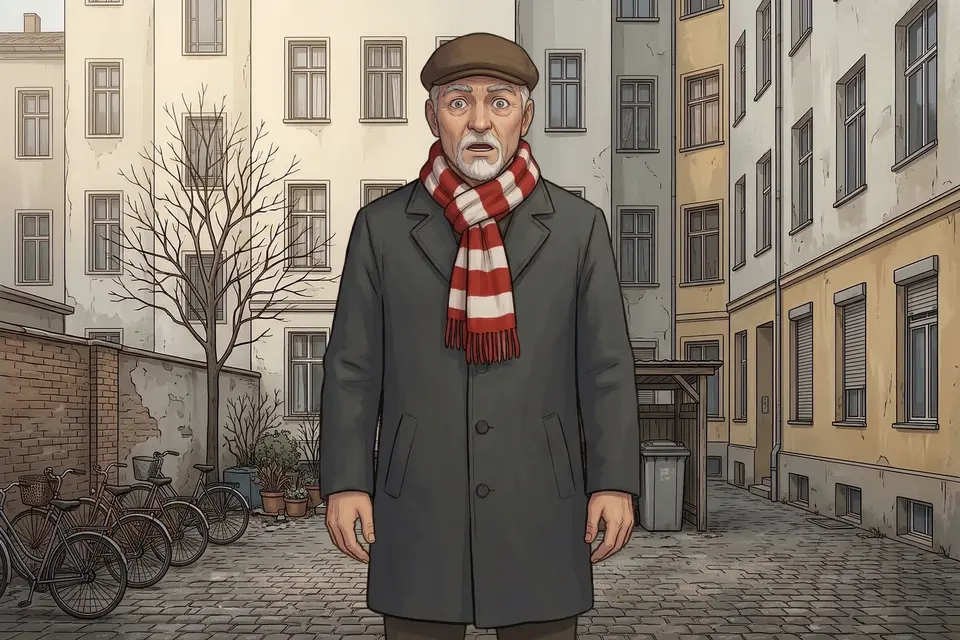
Am nächsten Morgen um neun klingelt es. Im Treppenhaus steht eine junge Frau mit einem roten Werkzeugkoffer.
The next morning at nine the doorbell rings. A young woman with a red toolbox is standing in the stairwell.
Krause: Ich rufe sie gleich an und frage.
I'll call her straight away and ask.
Zehn Minuten später ruft Frau Krause zurück. Frau Becker kommt heute um drei!
Ten minutes later Frau Krause calls back. Frau Becker is coming today at three!
Du: Super, vielen Dank, Frau Krause. Auf Wiederhören!
Great, thank you very much, Frau Krause. Goodbye!
Scene: The stairwell of an old Berlin apartment building
Um drei klingelt es. Im Treppenhaus steht eine junge Frau mit einem roten Werkzeugkoffer.
At three the doorbell rings. A young woman with a red toolbox is standing in the stairwell.
Becker: Tag! Becker, Heizung und Sanitär. Frau Krause hat mich geschickt.
Hello! Becker, heating and plumbing. Frau Krause sent me.
Becker: Na, was ist denn passiert?
So, what's happened?
Your answer
Good answer
Die Heizung ist ausgegangen, und seitdem ist alles kalt.
The heating went off, and everything has been cold since then.
Good answer
Die Therme zeigt ein rotes Licht. Ich habe sie schon neu gestartet.
The boiler is showing a red light. I've already restarted it.
Mistake: ausgehen takes sein in the Perfekt: die Heizung ist ausgegangen
Die Heizung hat ausgegangen. Jetzt ist alles kalt.
The heating went off. Now everything is cold.
Becker: Aha, die Heizung ist ausgegangen. Na, dann schauen wir mal.
Right, the heating has gone off. Well, let's have a look.
Scene: An empty flat with wooden floors
Frau Becker sieht sich die Therme in der Küche an.
Frau Becker takes a look at the boiler in the kitchen.
Becker: Aha. Der Druck ist zu niedrig. Da fehlt Wasser in der Anlage.
I see. The pressure is too low. There's not enough water in the system.
Becker: Ich fülle Wasser nach. Das dauert nur fünf Minuten.
I'll top up the water. It only takes five minutes.
Die Therme macht ein leises Geräusch. Dann geht das rote Licht aus.
The boiler makes a quiet noise. Then the red light goes off.
Becker: So, sie läuft wieder. In einer Stunde ist die Wohnung warm.
There, it's running again. In an hour the flat will be warm.
Becker: Wenn das rote Licht wiederkommt, rufen Sie Frau Krause an.
If the red light comes back, call Frau Krause.
Your answer
Good answer
Vielen Dank! Muss ich etwas bezahlen?
Thank you very much! Do I have to pay anything?
Becker: Nee, die Rechnung geht an Frau Krause. Schönen Tag noch!
Nope, the bill goes to Frau Krause. Have a nice day!
Good answer
Super, danke! Möchten Sie einen Kaffee?
Great, thanks! Would you like a coffee?
Becker: Nett, danke, aber ich habe heute noch fünf Termine. Schönen Tag noch!
That's kind, thanks, but I've got five more jobs today. Have a nice day!
Eine Stunde später sind die Heizkörper warm. Du duschst lange und heiß.
An hour later the radiators are warm. You take a long, hot shower.
Du kannst jetzt auf Deutsch sagen, was nicht funktioniert und seit wann. Super gemacht!
Now you can say in German what isn't working and since when. Well done!