Am Bahnhof – eine Fahrkarte und ein verspäteter Zug· Buying a train ticket in German – at the station · A2
Click the scene or press Space to continue, use the number keys to choose an answer. Tap a word to see its translation. Want to read along? Read the whole dialogue in German with English translation below.
What happens in the story
You want to visit a friend in Munich at the weekend. At the ticket counter of Berlin central station, Frau Becker asks where and when you want to go, if you want a single or a return ticket, if you have a BahnCard and if you'd like a seat reservation. On the platform you hear the announcements: your train is 40 minutes late, and then it leaves from a different platform! Luckily Frau Krause, who you might know from Asking for directions, is going to Munich too.
The story is written for A2 level learners and takes about 6 minutes.
Phrases you will learn
Ich möchte nach München fahren. – I'd like to go to Munich.
Eine Fahrkarte nach München, bitte. – A ticket to Munich, please.
Einfach oder hin und zurück? – Single or return?
Der Zug fährt um 14.28 Uhr von Gleis 7. – The train leaves at 2:28 pm from platform 7.
Ich möchte einen Sitzplatz am Fenster reservieren. – I'd like to reserve a window seat.
Der Zug hat 40 Minuten Verspätung. – The train is 40 minutes late.
Dann gehe ich zum Gleis 9. – Then I'll go to platform 9.
Grammar tip: nach, zu or von?
nach + cities and most countries: nach München, nach Spanien, and nach Hause (home).
zu + places and people, with the dative: zum Gleis 9, zum Bahnhof, zur Apotheke (zum = zu dem, zur = zu der).
von + where something starts, also with the dative: von Gleis 7, vom Hauptbahnhof.
Clock times take um: um 14.28 Uhr. A delay is "in": in 40 Minuten.
How to play
Click the scene or press Space to read on. When it is your turn, choose an answer with the mouse or the number keys. Natural answers earn points; a wrong answer is never a dead end, Frau Becker or Frau Krause shows you the right form and you go on.
Tap any word to see its translation and hear it pronounced. Save the new words to your personal learn list and practise them later with flashcards.
Read the dialogue
The whole story in German with English translation, every answer you can choose
Scene: The hall of a big German train station with the ticket office and the platforms behind
Du bist am Hauptbahnhof in Berlin. Am Wochenende möchtest du deine Freundin in München besuchen.
You're at Berlin central station. At the weekend you'd like to visit your friend in Munich.
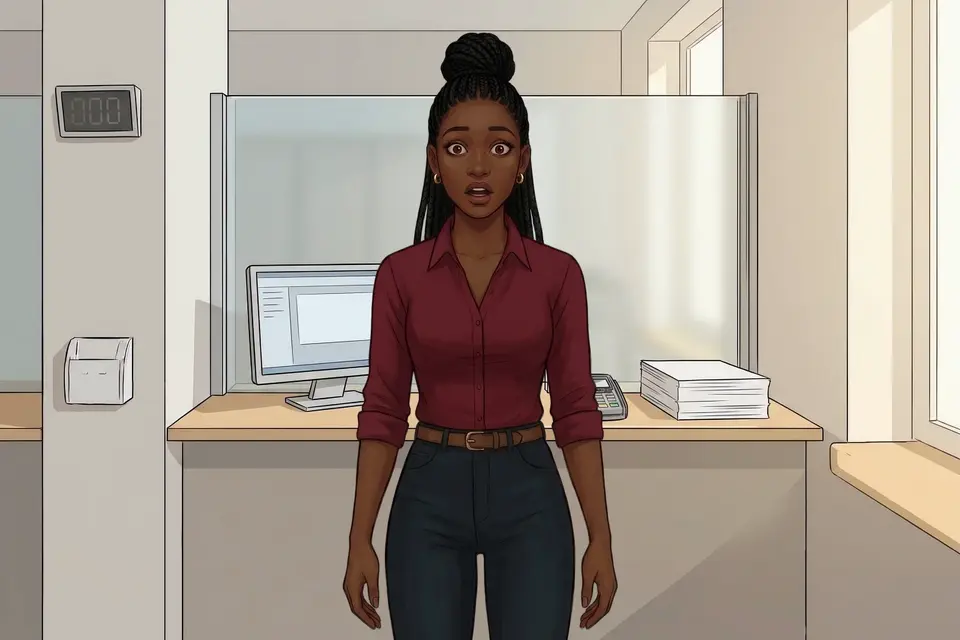
Du gehst zum Schalter im Reisezentrum.
You go to the counter at the travel centre.
Becker: Guten Tag! Wohin möchten Sie fahren?
Hello! Where would you like to go?
Your answer
Good answer
Ich möchte nach München fahren.
I'd like to go to Munich.
Good answer
Eine Fahrkarte nach München, bitte.
A ticket to Munich, please.
Mistake: cities take "nach"
Ich möchte zu München fahren.
I'd like to go to Munich.
Becker: Nach München, gern. Bei Städten sagt man „nach“.
To Munich, sure. With cities you say "nach".
Becker: Wann möchten Sie fahren?
When would you like to travel?
Your answer
Good answer
Heute, so schnell wie möglich.
Today, as soon as possible.
Good answer
Heute um zwei Uhr, wenn das geht.
Today at two o'clock, if that's possible.
Mistake: clock times take "um"
Heute an zwei Uhr.
Today at two o'clock.
Becker: Um zwei Uhr, meinen Sie. Bei der Uhrzeit sagt man „um“.
At two o'clock, you mean. With clock times you say "um".
Becker: Der nächste ICE fährt um 14.28 Uhr von Gleis 7. Sie sind um 18.30 Uhr in München.
The next ICE leaves at 2:28 pm from platform 7. You'll be in Munich at 6:30 pm.
Becker: Einfach oder hin und zurück?
Single or return?
Your answer
Good answer
Hin und zurück, bitte. Ich komme am Sonntag zurück.
Return, please. I'm coming back on Sunday.
Good answer
Nur einfach, bitte.
Just a single, please.
Becker: Haben Sie eine BahnCard?
Do you have a BahnCard?
Your answer
Good answer
Nein, ich habe keine BahnCard.
No, I don't have a BahnCard.
Good answer
Nein. Was ist eine BahnCard?
No. What's a BahnCard?
Becker: Eine Rabattkarte. Mit ihr fahren Sie billiger.
A discount card. With it you travel more cheaply.
Mistake: with nouns use "keine"
Nein, ich habe nicht eine BahnCard.
No, I don't have a BahnCard.
Becker: Also keine BahnCard. Man sagt „Ich habe keine BahnCard“.
So no BahnCard. You say "Ich habe keine BahnCard".
Becker: Möchten Sie einen Sitzplatz reservieren?
Would you like to reserve a seat?
Your answer
Good answer
Ja, gern, am Fenster, bitte.
Yes, please, by the window.
Good answer
Nein, danke.
No, thanks.
Becker: Hier ist Ihre Fahrkarte. Gute Reise!
Here's your ticket. Have a good trip!
Scene: The hall of a big German train station with the ticket office and the platforms behind
Um 14.15 Uhr stehst du am Gleis 7. Dann kommt eine Durchsage.
At 2:15 pm you're standing on platform 7. Then there's an announcement.
„Der ICE nach München hat heute circa 40 Minuten Verspätung.“
"The ICE to Munich is delayed by about 40 minutes today."
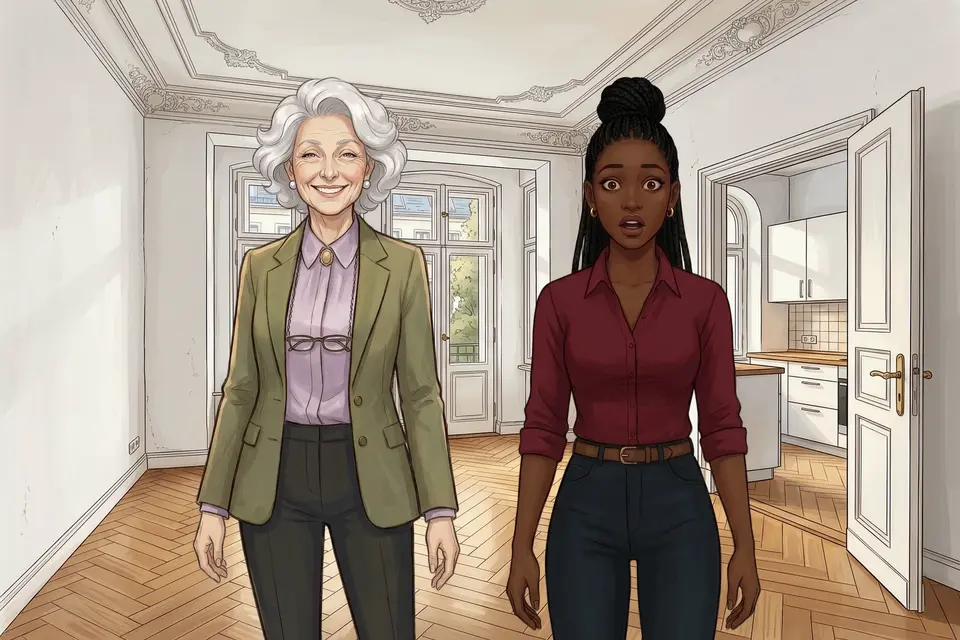
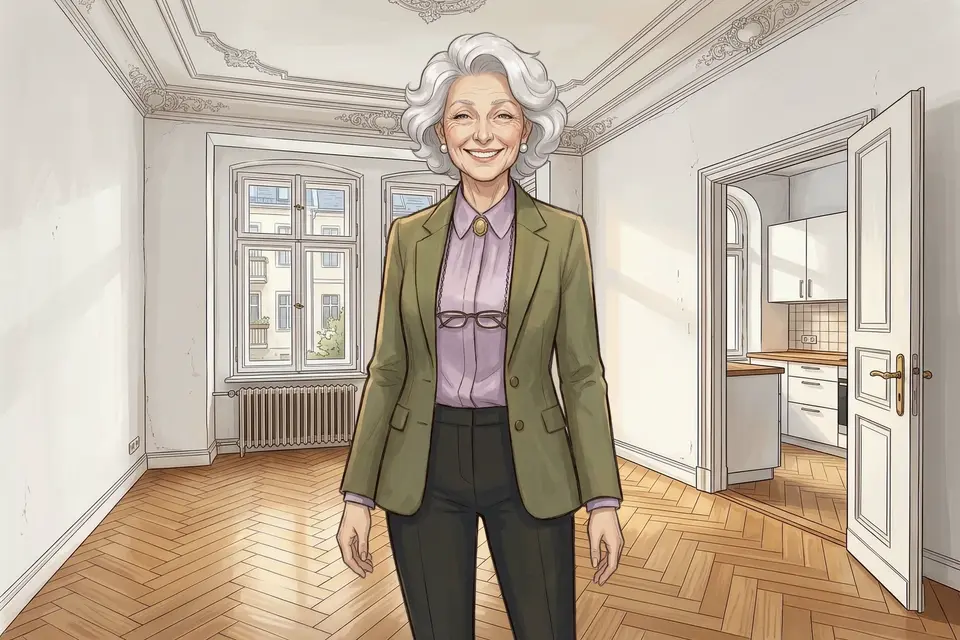
Neben dir steht eine ältere Dame mit einem Koffer. Es ist Frau Krause.
An older lady with a suitcase is standing next to you. It's Frau Krause.
Krause: Oh nein, schon wieder Verspätung!
Oh no, another delay!
Your answer
Good answer
Entschuldigung, wie lange hat der Zug Verspätung?
Excuse me, how long is the train delayed?
Krause: Ungefähr 40 Minuten, also kommt er um 15.08 Uhr.
About 40 minutes, so it comes at 3:08 pm.
Good answer
Entschuldigung, fährt der Zug nach München von diesem Gleis?
Excuse me, does the train to Munich leave from this platform?
Krause: Ja, aber er kommt erst in 40 Minuten.
Yes, but it won't come for another 40 minutes.
Dann kommt noch eine Durchsage.
Then there's another announcement.
„Achtung, der ICE nach München fährt heute von Gleis 9.“
"Attention, the ICE to Munich leaves from platform 9 today."
Krause: Haben Sie das gehört? Gleis 9!
Did you hear that? Platform 9!
Your answer
Good answer
Danke! Dann gehe ich zum Gleis 9.
Thanks! Then I'll go to platform 9.
Krause: Ich muss auch nach München. Kommen Sie, wir gehen zusammen!
I'm going to Munich too. Come on, let's go together!
Mistake: "nach" is for cities: zum Gleis 9
Danke! Dann gehe ich nach Gleis 9.
Thanks! Then I'll go to platform 9.
Krause: Zum Gleis 9, ja. „Nach“ sagt man nur bei Städten und Ländern.
To platform 9, yes. You only say "nach" with cities and countries.
Krause: Kommen Sie, ich muss auch nach München. Wir gehen zusammen!
Come on, I'm going to Munich too. Let's go together!
Um 15.08 Uhr kommt der ICE. Du steigst mit Frau Krause ein.
At 3:08 pm the ICE arrives. You get on with Frau Krause.
Du kannst jetzt auf Deutsch eine Fahrkarte kaufen und verstehst die Durchsagen. Gute Reise!
Now you can buy a ticket in German and you understand the announcements. Have a good trip!