German A1 – Lessons for Beginners

Just starting German? These A1 lessons take you from your first words to simple conversations about yourself, your family and your day.

German Coordinating Conjunctions image
A1Grammar · 11 min read

German Coordinating Conjunctions

Explore German coordinating conjunctions (Nebenordnende Konjunktionen) with this guide! Learn how to use 6 core conjunctions: "und", "oder", "aber", "denn", "doch" and "sondern" correctly, including rules for comma placement, example sentences and interactive quiz.


Halloween German Vocabulary image
A1Vocabulary · 13 min read

Halloween German Vocabulary

Get ready to speak spooky German! From creepy costumes 🧛 to haunted houses 👻, this all-in-one guide teaches over 100 Halloween words and phrases like "der Kürbis" (pumpkin) or "das Gespenst" (ghost). Explore quick cheat sheets, themed vocabulary tables, fun dialogues, grammar tips and cultural notes.

German Informal Letters: Tips, Examples and Exam Practice image
A1Writing · 5 min read

German Informal Letters: Tips, Examples and Exam Practice

Want to learn how to write friendly emails, postcards or notes in German? This guide describes informal letter (informelle Briefe) structure, useful phrases, greetings and closings. Explore real A1 exam examples, translations and practical tips to improve your writing skills.

How to Write Formal Letters in German? (Formelle Briefe) image
A1Writing · 6 min read

How to Write Formal Letters in German? (Formelle Briefe)

Writing formal letters (formelle Briefe) is a key skill for German learners, especially for the Goethe A1 exam. In German official letters follow a clear structure and require polite, precise language. This guide shows you when to use a formal letter, how to format it correctly and real A1 exam examples.

German Prepositions of time (Temporale Präpositionen) image
A1Grammar · 8 min read

German Prepositions of time (Temporale Präpositionen)

Want to speak about time accurately in German? This guide breaks down all the key temporal prepositions — like um, am, im, seit, and für — showing you which case to use (accusative or dative) and how to use them in real-life sentences. Learn the difference between seit and für and get a chart with examples.

How to Book a Hotel Room? (Hotelzimmer buchen) image
A1Vocabulary · 10 min read

How to Book a Hotel Room? (Hotelzimmer buchen)

If you plan a trip to Germany, knowing how to book a hotel in German will make your stay much easier and more enjoyable. This guide provides useful phrases to help you book a hotel room confidently, communicate at the reception during check-in and checkout and ask for information politely and clearly.

How to Ask for Directions in German: Best Phrases for City image
A1Vocabulary · 6 min read

How to Ask for Directions in German: Best Phrases for City

Finding your way in Germany becomes much easier when you know the right words and phrases. This guide covers essential German vocabulary for landmarks, roads and directions, such as "die Ampel" (traffic light), "geradeaus" (straight ahead) plus polite ways to ask for help and real-life example dialogues.

Travel and Transport in German (Reisen und Verkehr) image
A1Vocabulary · 5 min read

Travel and Transport in German (Reisen und Verkehr)

Travel and transport (Reisen und Verkehr) are key topics for anyone learning German. Learn common German transport types like das Auto (car), der Zug (train) and die U-Bahn (subway), essential verbs such as einsteigen (to board) and umsteigen (to transfer) and phrases like "Wo ist der Bahnhof"?

Plural of Nouns in German (Plural im Deutschen) image
A1Grammar · 5 min read

Plural of Nouns in German (Plural im Deutschen)

In German plurals (Plural von Nomen) show that we are talking about more than one thing or person. This beginner-friendly guide explains the main plural rules, including endings like -e, -er, -n/-en, -s and when vowels change with umlauts. You’ll also learn how to recognize plurals using articles and verbs.

Describing Parts of Body in German (Körperteile) image
A1Vocabulary · 6 min read

Describing Parts of Body in German (Körperteile)

The human body (der Körper) is made up of many parts (die Körperteile). In this article you will learn the essential German vocabulary for body parts with English translations and example sentences. Explore words such as der Kopf (head), das Auge (eye), die Nase (nose) and many more.

Forming the Future Tense with the German Verb "Werden"  image
A1Grammar · 4 min read

Forming the Future Tense with the German Verb "Werden"

The German verb "werden" is essential for A1 learners, appearing in many contexts — from expressing change ("to become") to forming the future tense and passive voice. This guide covers its meanings, conjugation in present and past tenses and practical examples.

How to Describe Clothes in German (Kleidung) image
A1Vocabulary · 6 min read

How to Describe Clothes in German (Kleidung)

Clothing is a key part of daily life, and knowing the right German words helps you describe what you wear, shop for clothes and discuss fashion. This article covers essential Kleidung vocabulary, including nouns, adjectives like neu, schön, bequem and useful verbs like tragen, anziehen, passen.

How to Ask and Tell Time in German (Uhrzeit) image
A1Vocabulary · 7 min read

How to Ask and Tell Time in German (Uhrzeit)

Mastering how to ask and tell time in German is essential for daily life — whether you’re meeting friends, catching a train or following a timetable. This step-by-step guide covers everything from casual "Wie spät ist es?" conversations to precise 24-hour clock expressions with "vor", "nach", "halb".

German Imperative (Deutsch Imperativ) Guide image
A1Grammar · 3 min read

German Imperative (Deutsch Imperativ) Guide

The German imperative (Deutsch Imperativ) is used to give commands, instructions, or invitations — essential for sounding natural in daily conversations. In this article you’ll learn how to form the imperative for du, ihr, Sie, and wir, with easy examples like Geh! (Go!), Komm! (Come!), and Lesen Sie! (Read!).

Nominative Case in German (Nominativ im Deutschen) image
A1Grammar · 4 min read

Nominative Case in German (Nominativ im Deutschen)

The German nominative case (Nominativ) is the foundation of German grammar, marking the subject of a sentence. In this article you’ll learn when to use the nominative, how articles (der, die, das, ein, kein) change with gender and number, and how to apply possessive pronouns correctly.

Easy Guide to German Dative Case (Der Dativ) image
A1Grammar · 4 min read

Easy Guide to German Dative Case (Der Dativ)

The Dative case (der Dativ) in German is used to mark the indirect object — the person or thing receiving the action. This article explains the dative case rules, shows examples and how articles and pronouns change. You’ll also learn about dative verbs and prepositions that always require this case.

German A1 Roadmap & Self-Study Guide image
A13 min read

German A1 Roadmap & Self-Study Guide

Learning German is an exciting journey! The A1 level is your entry point into the language, where you'll learn to introduce yourself and understand everyday German. This guide offers a structured roadmap with essential grammar, vocabulary and self-study strategies to help you confidently reach A1 level.

Food & Drink Vocabulary in German – Essen & Trinken image
A1Vocabulary · 7 min read

Food & Drink Vocabulary in German – Essen & Trinken

Looking to learn German food and drink words? This article covers important terms for Essen und Trinken – from fruits and vegetables to drinks and everyday meals. You’ll also find example sentences and phrases to help you speak German with confidence in restaurants, supermarkets and everyday life.

Going Shopping in German – Einkaufen gehen image
A1Vocabulary · 4 min read

Going Shopping in German – Einkaufen gehen

Shopping is a big part of everyday life. In this beginner-friendly guide you’ll learn how to speak confidently in German stores and supermarkets. Discover key vocabulary, useful buyer/seller phrases, sample dialogues and grammar tips with examples.

Overview of the Goethe A1 Deutsch Exam Structure image
A1Goethe Exam · 5 min read

Overview of the Goethe A1 Deutsch Exam Structure

Planning to take the Goethe A1: Start Deutsch exam? This comprehensive guide walks you through the exam structure, including Listening, Reading, Writing and Speaking sections, and offers practical tips to help you prepare effectively. Discover what to expect on test day and see useful advice for each task.

Guide to German Perfect Tense (Perfekt) image
A1Grammar · 4 min read

Guide to German Perfect Tense (Perfekt)

The perfect tense in German, also known as Perfekt, is one of the most used verb forms in spoken German when referring to events that happened in the past. In this article you will find out when to choose Perfekt or Präteritum, when to use haben or sein for Perfekt tense and what is Partizip II.

German A1 Niveau Certificate: Why is it Important? image
A1Goethe Exam · 3 min read

German A1 Niveau Certificate: Why is it Important?

Niveau A1 (Level A1) is the entry-level stage of the Common European Framework of Reference for Languages (CEFR). In this article you'll learn where A1 German Certificate is needed, how to prepare for the exam and which institutions offer recognized A1 certification.

Modal Verbs (Modalverben) in German Explained image
A1Grammar · 5 min read

Modal Verbs (Modalverben) in German Explained

Modal verbs (Modalverben) are essential for expressing permission, ability, necessity and desire. You’ll learn the key modal verbs — dürfen, können, mögen, müssen, sollen and wollen — along with their English equivalents, sentence structure rules and full conjugation charts (Präsens and Präteritum).

Guide to Negation in German: Nein, Nicht, Doch oder Nie? image
A1Grammar · 6 min read

Guide to Negation in German: Nein, Nicht, Doch oder Nie?

Negation is essential in German grammar and goes far beyond just saying "no". In this article you’ll learn how to use German negation words like "nein", "nicht", "kein", "nie", "doch", "nichts" and "niemand" correctly and discover how to express "nothing", "never" or "nobody".

 Guide to the German Modal Verb "können" (can) image
A1Grammar · 4 min read

Guide to the German Modal Verb "können" (can)

Want to say what you can or cannot do in German? This complete guide to the modal verb "können" covers everything: meanings, sentence structure, conjugation tables, negation rules, question formation and common expressions.

What Is the German Accusative Case (Akkusativ)? image
A1Grammar · 5 min read

What Is the German Accusative Case (Akkusativ)?

Learn the German accusative case (Akkusativ) with this clear and easy guide! Find out when to use changed articles like "den", "einen", "keinen" as well as accusative pronouns such as "mich", "dich" and more.

Daily Routine in German – Learn Tagesablauf Vocabulary image
A1Vocabulary · 6 min read

Daily Routine in German – Learn Tagesablauf Vocabulary

Want to talk about your daily life in German? Then learn essential Tagesablauf vocabulary, grammar tips and real-life example sentences to describe everything from waking up and going to work to hobbies, chores, shopping and relaxing.

German Months and Seasons: Vocabulary and Prepositions image
A1Vocabulary · 5 min read

German Months and Seasons: Vocabulary and Prepositions

Learn how to confidently talk about months, seasons, and times of the year in German! This essential guide covers the 12 German months, the four seasons, useful time expressions, and how to use prepositions like "im", "am" and "seit".

Days of the Week in German with Prepositions image
A1Vocabulary · 3 min read

Days of the Week in German with Prepositions

This article introduces each weekday in German with pronunciation, explains grammar rules like article usage (der Montag) and covers key prepositions such as am Montag (on Monday) and von Montag bis Freitag (from Monday to Friday).

How to Describe a House or Apartment in German image
A1Vocabulary · 8 min read

How to Describe a House or Apartment in German

Want to talk about your home in German? This beginner-friendly guide teaches you how to describe your house or apartment step by step. Learn essential vocabulary like Wohnung and Zimmer and get tips for daily practice.

Speaking about German Professions (Berufe)  image
A1Vocabulary · 7 min read

Speaking about German Professions (Berufe)

This article helps you learn essential German phrases for talking about professions, including formal and informal questions, typical answers and a comprehensive list of common professions. Whether you’re meeting new people or having dialogs at work, our tips will help you speak confidently.

Talking About Hobbies and Interests in German image
A1Vocabulary · 4 min read

Talking About Hobbies and Interests in German

Find out how to speak about your hobbies and interests in German. This A1-level guide covers vocabulary like lesen (to read), Gitarre spielen (to play guitar) and Tischtennis spielen (to play table tennis). Learn key phrases like "Ich spiele gern…" and read a sample dialogue about hobbies.

Separable and Inseparable Verb Prefixes image
A1Grammar · 4 min read

Separable and Inseparable Verb Prefixes

Learning German verbs can be challenging, especially when it comes to separable (trennbare) and inseparable (nicht trennbare) verbs. This article describes common prefixes and their meaning, explains tricky double-meaning verbs and provides a quiz to check your knowledge.

German Verb Conjugation in the Present Tense (Präsens) image
A1Grammar · 3 min read

German Verb Conjugation in the Present Tense (Präsens)

Learning verb conjugation in the present tense is essential for clear communication in German. This article explains when to use the Präsens, how to conjugate weak (regular), strong (irregular) and mixed verbs.

German Possessive Pronouns image
A1Grammar · 3 min read

German Possessive Pronouns

Possessive pronouns in German – like mein (my), dein (your), and sein (his) – show ownership or relationships. They adapt based on gender, number and case. This guide covers base forms, endings, example sentences and practical tips to use them.

Talking About Your Family in German image
A1Vocabulary · 5 min read

Talking About Your Family in German

Learn how to talk about your family members such as parents, siblings and grandparents in German using helpful vocabulary, common questions and a sample story of Jonas describing his family.

Simple Personal Questions & Answers in German image
A1Vocabulary · 5 min read

Simple Personal Questions & Answers in German

Master simple personal conversations in German! This article covers essential questions and answers about someone's name, age, country, marital status, work or stuspoken languages, hobbies, and current place of residence.

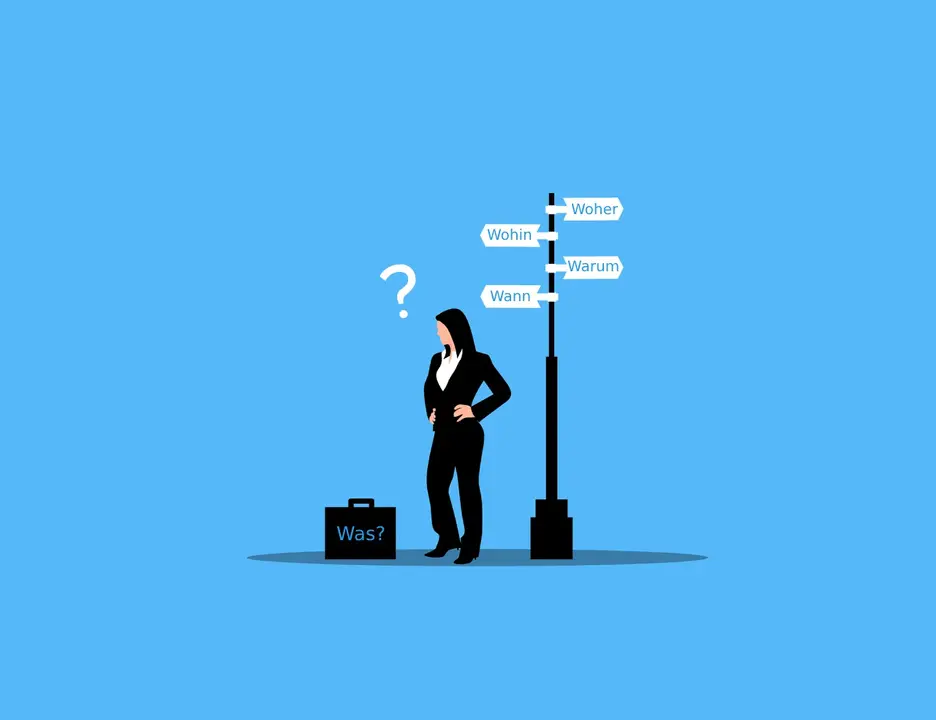
It All Starts with a W: How W-Questions Work image
A1Grammar · 4 min read

It All Starts with a W: How W-Questions Work

W-Fragen are open-ended German questions that begin with a "W" word like Was, Wo or Warum. Similar to the English "Five Ws" they are essential for meaningful conversations and effective writing. This article breaks down their structure, provides real-world examples and offers helpful tips and exercises.

How to Compose and Answer Yes-No Questions image
A1Grammar · 5 min read

How to Compose and Answer Yes-No Questions

Ja-Nein Fragen are simple yes-no questions common in everyday German. This article explains the essential word order rule – verb first, then subject – and shows how to form questions with modal verbs, separable verbs and the Perfekt tense. Also find out how to compose answers, including negations.

The Verb "haben" (To Have) in Present Tense image
A1Grammar · 3 min read

The Verb "haben" (To Have) in Present Tense

The German verb "haben", meaning "to have", is essential for any learner. It’s irregular in the present tense and widely used to express possession, build perfect tenses and form common idioms. This article covers present tense conjugation, real-life examples, idiomatic usage and practical exercises.

German Sentence Structure and Word Order image
A1Grammar · 6 min read

German Sentence Structure and Word Order

Learning German word order helps you make correct and natural sentences. This article explains the most important rules in easy language with lots of examples. You will find out where to put the verb, how to ask questions, how to use subordinate clauses, etc.

How to Ask “What’s Your Name?” and Say Yours image
A1Speaking · 3 min read

How to Ask “What’s Your Name?” and Say Yours

Meeting someone in a German-speaking country? Knowing how to ask “What’s your name?” The right way can make a big difference. This article explains when to use formal vs. informal phrases like Wie heißen Sie? or Wie heißt du?, provides sample answers, key grammar rules and a quiz.

Introduction to Indefinite and Negative Articles image
A1Grammar · 3 min read

Introduction to Indefinite and Negative Articles

Understanding how to use articles ein/eine (a/an) and kein/keine (not a/no) is essential when learning German. This guide focuses on their forms and usage in the nominative case, which is used for the subject of a sentence.

The Verb "sein" (to be) in Present Tense image
A1Grammar · 3 min read

The Verb "sein" (to be) in Present Tense

The German verb "sein" means "to be" in English and is one of the first verbs learners encounter. This guide explains how to use "sein" in the present tense (Präsens) with personal pronouns like ich bin, du bist and wir sind. You'll learn when to use it, how to form questions and negations and get exercises to practice.

Listening Practice with the Fairy Tale "The Herald in the Forest" image
A1Listening · 6 min read

Listening Practice with the Fairy Tale "The Herald in the Forest"

Der Herold im Wald (The Herald in the Forest) is a beginner-friendly story told in slow, clear German – perfect for A1 and A2 learners. Follow Karl’s journey through a dark forest and discover new vocabulary in context. The article includes a video link, side-by-side transcript, vocabulary list and a quiz to test comprehension.

German Personal Pronouns Explained: From Ich to Sie image
A1Grammar · 2 min read

German Personal Pronouns Explained: From Ich to Sie

German personal pronouns like ich, du, and Sie are essential for everyday communication. This guide explains each pronoun by meaning, number and usage, with examples to help you speak and write more naturally in German.

When to Say Guten Morgen, Guten Tag, Guten Abend: German Greetings by Time of Day image
A1Vocabulary · 3 min read

When to Say Guten Morgen, Guten Tag, Guten Abend: German Greetings by Time of Day

German greetings by time of day explained: discover when to use Guten Morgen, Guten Tag and Guten Abend, plus list of useful time of day vocabulary with terms like Vormittag and Nachmittag. Includes time ranges, translations and examples. Perfect for travelers, learners, and anyone wanting to speak German more naturally.

Formal and Informal Greetings and Farewell Phrases in German image
A1Speaking · 4 min read

Formal and Informal Greetings and Farewell Phrases in German

The German language places a strong emphasis on formality and context. In this guide, you'll discover how to greet and say goodbye in both formal and informal situations with examples like "Guten Tag" and "Tschüss". From professional conversations to casual chats, learn how to navigate German social etiquette through clear examples, real-life dialogues and an interactive quiz.

German Articles Explained: Der, Die, Das image
A1Grammar · 3 min read

German Articles Explained: Der, Die, Das

In this beginner-friendly guide you’ll learn how German grammatical gender works and how to choose the correct article based on gender, number, and case. We break down definite and indefinite articles with easy-to-follow tables, helpful examples and practical tips.

Guide to the German Alphabet (Deutsches Alphabet) image
A1Grammar · 5 min read

Guide to the German Alphabet (Deutsches Alphabet)

Curious about how the German alphabet works? This comprehensive guide introduces you to the "Deutsches Alphabet," covering all 26 standard letters plus the unique German characters Ä, Ö, Ü, and ß. Discover how German pronunciation differs from English, learn essential vocabulary, and see practical examples that will help you master spelling and reading in German.

Our A1 articles cover:

  • Basic grammar: sein and haben, articles, present tense and word order
  • Everyday words: numbers, time, family, food and hobbies
  • How to ask and answer simple questions
  • A self-study plan and tips for the A1 exam

Practise with the A1 exercises and the A1 word list.